Author

admin

Browsing

Roughly 36,000 Heartwarming Hugs Bears, a stuffed animal manufactured by Build-A-Bear, are being recalled due to a zipper detaching from the bear’s pouch.

On Thursday, the U.S. Consumer Product Safety Commission announced that the stuffed animals pose a serious risk of injury or death, as the detached zipper can present a choking hazard.

The recall number is 034464. The recall number can be found on the product label located on the back of one of the bear’s legs.

The bear includes a stuffed heart that fits inside a pocket. The heart-shaped insert is filled with 2.5 pounds of ceramic beads and can be used as a heating pad or chilled for cooling comfort.

“The product is graded 3 years+ and carries a cautionary statement advising adult supervision due to the heated/cooled element,” the release stated.

The bear was sold between January 2026 and March 2026 for about $48.

Customers are advised to immediately stop using the Heartwarming Hugs Bear. Consumers who purchased the bear should return it to the nearest Build-A-Bear store or request a shipping label at www.buildabear.com/recalls. Once returned, Build-A-Bear will issue a refund to the original form of payment or provide a gift card.

There have been no reported injuries, although one consumer in the United Kingdom reported the zipper detaching.

For information on the recall visit Build-A-Bear online at www.buildabear.com/recalls according to the release.

Thermos is recalling 8.2 million containers after consumers suffered laceration injuries — and in some cases reported permanent vision loss — when stoppers forcefully ejected from the products and struck them in the face.

The recall covers approximately 5.8 million Stainless King Food Jars and 2.3 million Sportsman Food & Beverage Bottles. According to a recall notice posted by the U.S. Consumer Product Safety Commission on April 30, consumers should stop using the affected products immediately.

The affected models include Thermos Sportsman Food & Beverage Bottles: all units, model SK3010; Food Jars and Food & Beverage Bottles: all units, models SK3000 (16-ounce), SK3020 (24-ounce), and SK3010 (40-ounce); and Thermos Stainless King Food Jars manufactured before July 2023: models SK3000 and SK3020.

The model number can be found at the bottom of the item.

The hazard stems from a design flaw in the stopper — the component that retains heat and prevents leakage. If perishable food or beverages are stored for an extended period, pressure can build up and cause the stopper to forcefully eject when the container is opened. Unlike safer designs, the stopper on the recalled models lacks a pressure-relief valve.

Thermos said it has received 27 reports of consumers being struck by an ejected stopper, including injuries requiring medical attention. Three consumers reported suffering permanent vision loss after being struck in the eye.

The recalled products were sold between March 2008 and July 2024 at Walmart, Target, and Amazon, as well as on Thermos.com. They were available in a variety of colors and bear the Thermos trademark on the side.

Owners of SK3000 and SK3020 Food Jars should dispose of the stopper and submit a photo of the disposal to Thermos. Owners of SK3010 bottles should return the product using a prepaid shipping label provided by the company. For details on returns and replacements, visit the Thermos recall page at Thermos.com.

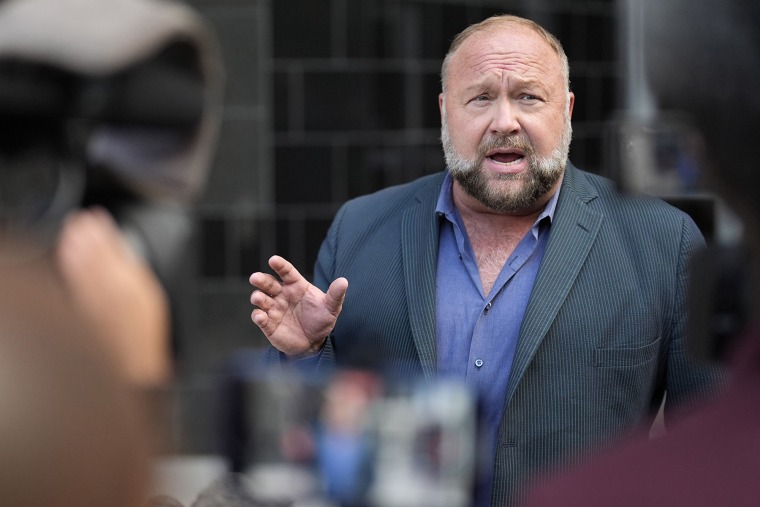
AUSTIN, Texas — The Onion’s plan to take over the Infowars platforms that Alex Jones built into a bullhorn of conspiracy theories and turn them into parody sites was in limbo again Thursday, after a Texas court paused a proposed deal involving the satirical news outlet.

Austin-based Infowars is facing liquidation because of the more than $1 billion in defamation lawsuit judgments Jones owes relatives of victims of the 2012 Sandy Hook Elementary School shooting for calling the Connecticut massacre a hoax. The proposed licensing deal would give The Onion temporary authority to use Infowars’ trademarks, copyrights and intellectual property while a state receiver in Texas works toward liquidation.

A state judge in Austin had scheduled a hearing Thursday on whether to approve The Onion deal with the receiver. But the proceeding fizzled into a status conference because the Texas Third Court of Appeals late Wednesday approved an emergency motion by Jones’ lawyers that temporarily blocked the transfer of any Infowars assets. The judge set another hearing for May 28.

Lawyers for the Sandy Hook families had asked the Texas Supreme Court to overturn the appeals court ruling, but the high court did not issue a decision before Thursday’s hearing.

“This newly insane, unprecedented legal stalling does nothing but delay our deal with the receiver to take control of InfoWars,” Ben Collins, The Onion’s CEO, said in a social media post ahead of the hearing. “We now expect new traps in Alex Jones’ amoral war to deny paying the Sandy Hook families, but we’re freshly surprised by the U.S. legal system’s appetite to put up with it.”

The Onion already has been selling Infowars merchandise on its own website, including T-shirts and tote bags with an Infowars logo that replaces the “o” with its trademark onion image. It wants to turn the Infowars platforms into comedy sites that would include spoofing Jones, conspiracy theories and right-wing talking points, while giving revenue to the Sandy Hook victims’ relatives.

Jones declared victory in videos posted on his social media sites after the appellate court ruling. He called The Onion’s plan illegal, citing pending appeals and his continuing personal bankruptcy case.

“I said days ago there’s no way the Third Circuit Court of Appeals in Texas doesn’t overturn this — you know they’re all Democrats — because it’s so outrageous what you’ve done,” Jones said.

After Thursday’s hearing, Mark Bankston, a lawyer for some of the Sandy Hook victims’ relatives, accused Jones of delaying the liquidation of Infowars numerous times with court filings.

“As far as the world is concerned, Infowars is dead. Everybody knows that,” he said. “He’s trying to keep the bloated corpse of a media organization alive. It’s all a joke. Everybody knows where this is going.”

It’s not the first time The Onion has hit a legal setback in plans to take over Infowars.

In November 2024, the Chicago-based satirical outlet was named the winner of a bankruptcy court auction of the assets of Infowars’ parent company, Free Speech Systems, aimed at helping pay some of the defamation judgments. But a federal judge overturned the auction results, citing problems with process and The Onion’s bid.

Jones said on his show this week that he has a new studio nearing completion. He already has set up a new phone app and websites, including one that sells the dietary supplements, clothing and other merchandise he hawks on his shows. And his personal X account, where he posts videos of his shows and has 4.5 million followers, is not affected by any of the court cases.

On Thursday night, Jones toasted to his crew and viewers during a livestream on X as a clock ticked down to when he said his final moments in the building would hit.

“We’re not here anymore because they’re turning the power off at midnight,” he said.

Market watchers looking for clarity about the direction of Big Tech and the AI investment boom didn’t get much Wednesday afternoon amid a barrage of key earning reports.

Instead, four leading tech companies reported quarterly results that beat Wall Street’s official forecasts but nevertheless fell short of the sky-high expectations investors have set for companies leading the AI revolution.

Investors were most enthusiastic about the results of Google parent Alphabet, whose shares climbed as much as 6% in after-hours trading. The company reported earnings and revenue that beat analysts’ expectations and raised its estimate of how much it would spend on AI infrastructure.

Earnings for Facebook parent Meta were greeted with less fervor. Its shares fell more than 5% after it said it expected revenue growth to stay flat in the second quarter.

Amazon’s and Microsoft’s results and forecasts were more mixed. Investors ultimately sent both lower by about 3%.

The major U.S. stock indexes are sitting near all-time highs despite war with Iran, rising oil prices and dismal consumer sentiment readings.

But overall business investment and consumer spending levels remain resilient — and companies on the S&P 500, the index considered the best proxy for overall stock market performance, are reporting the highest average net profit margins in more than 15 years, according to the analytics group FactSet.

That performance is being led by tech companies known as “The Magnificent 7” — Apple, Microsoft, Alphabet, Amazon, Meta, Nvidia and Tesla, which dictate about one-third of the S&P 500’s average performance.

Tech’s leadership has created a double-edged sword for the market writ large: When times are good in tech, the market tends to rise. When tech’s performance is rockier, the market can sink.

“Stocks are again trading at record highs, reflecting strong investor confidence, but the S&P 500’s heavy concentration in the Mag 7 technology leaders elevates downside risk should earnings fall short, as valuations leave little margin for error,” Chris Brigati, chief investment officer at SWBC, a Texas-based financial group with more than $1 billion in assets under management, said in a note to clients this week.

Investors remain focused on the companies’ projections for future spending levels on the technology and infrastructure underlying their AI programs — and how they square with revenue, Brigati said.

“Each company faces its own dynamics, but delivering tangible results from elevated [capital expenditures] remains the critical test,” he said.

Until the end of March, Mag 7 companies’ performance had been caught in the downdraft that hit the broader market as the war with Iran took hold. Many had already spent much of the second half of 2025 treading water as concerns about the timeline for earnings from AI investments, plus seemingly circular financing arrangements, took hold.

But sometime in early April, investors began to realize that the most important names had been trading at discounts relative to projected earnings, according to Ed Yardeni, an economist and president of Yardeni Research, a widely respected market consultancy.

“I think the perception that there might be an exit ramp for Trump with the war with Iran and ceasefire got investors looking at markets again, and what they suddenly realized is the overall market, and specifically the Mag 7, were a lot cheaper,” Yardeni told NBC News.

In recent days, the market has lost some momentum amid signals that President Donald Trump is planning for a more prolonged conflict. A Wall Street Journal report that ChatGPT maker OpenAI may be on track to miss key revenue and user targets has also slowed tech’s recent momentum. OpenAI investments in — and from — other major tech companies have left it deeply intertwined in the AI boom, and some investors fear any weakness could ripple through parts of the AI ecosystem.

OpenAI called the Journal report “clickbait.”

The actual severity of any shortcomings at OpenAI and how far any weaknesses could spread remain open questions, Yardeni said. For now, cautious investor optimism remains the prevailing sentiment and will most likely continue to power markets higher.

“Concerns about some of the uncertainties, like if these companies are spending too much or if they’ll ever get a proper rate of return, that seems to have gone by the wayside,” he said.

President Donald Trump will be briefed Thursday on options for the way ahead in the Strait of Hormuz and on the ground in Iran, according to a U.S. official familiar with the planning.

Adm. Brad Cooper, the commander of U.S. Central Command, will brief Trump and his senior national security team at the White House, the official said, and update them on the continued U.S. blockade of Iran’s ports.

The update came after energy prices soared to their highest point in years with little sign of a deal to end the war.

Iran’s new supreme leader vowed in a message earlier Thursday that the Islamic Republic would protect its “nuclear and missile capabilities” as national assets.

The defiant written statement, read on state television, was the latest signal that Tehran was not about to capitulate in the standoff wreaking havoc on the global economy.

The price of the international benchmark for oil, Brent crude, rose to more than $126 a barrel at one point overnight — the highest since 2022, when Russia launched its invasion of Ukraine — before falling back to around $114 a barrel early Thursday.

Gas prices in the United States rose to an average of $4.30 a gallon Thursday, also the highest level in nearly four years.

The spike came following an Axios report that the U.S. military was set to brief President Donald Trump on plans for potential military action to help break the deadlock in talks to end the war and reopen the key trade route.

One plan prepared by U.S. Central Command includes a wave of “short and powerful” strikes intended to force Iran back to the negotiating table, Axios reported.

A senior Revolutionary Guard commander vowed swift retaliation if the U.S. does renew its assault.

“With prolonged and wide-ranging painful strikes, we will, by the grace of God, respond to the enemy’s operations even if they are rapid and short,” Seyed Majid Mousavi said on social media Thursday.

“We have seen the fate of your fragile bases in the region; we will also see your warships,” he said.

It comes after Trump warned that Iran had “better get smart soon” as he weighed possible military options to reopen the strait, through which some 20% of the world’s oil passes.

Traffic in the waterway has been at an effective standstill since Iran attacked shipping after the U.S. and Israel launched their joint military assault in late February, rattling the global economy.

Washington launched its own blockade of Iranian ports in response, and Trump told Axios on Wednesday that it would stay in place until Iran agreed to a nuclear deal.

That seemingly rules out a new Iranian proposal to end the war and reopen the strait without resolving the impasse over the Islamic Republic’s nuclear program. Trump said he saw the blockade as “somewhat more effective than the bombing.”

Trump told reporters at the White House on Thursday that the blockade is working well.

“The power of the blockade is incredible. They’re not getting any money from oil, and hopefully it can be worked out very soon,” he said.

Trump added, “Iran is dying to make a deal.”

Trump and other top administration officials met with a group of energy industry executives earlier this week to discuss key issues, including Washington’s possible next steps in continuing the blockade “for months if needed,” a White House official told NBC News.

Members of Trump’s national security team presented him with multiple options this week for how to handle the bottleneck, a U.S. official and a person familiar with the meeting told NBC News. The options discussed included whether the U.S. military presence in the strait should change — either increase or decrease — and whether the military should become more aggressive in conducting operations there, the U.S. official said.

The prospect of prolonged disruption in the strait has sent energy prices soaring despite the ceasefire. “Our world is facing a major economic and energy challenge,” International Energy Agency head Fatih Birol told a conference in Paris.

President Donald Trump on Thursday filed a $5 billion lawsuit against JPMorgan Chase and its CEO Jamie Dimon, claiming that the bank improperly closed his accounts for political reasons.

‘While we regret President Trump has sued us, we believe the suit has no merit,’ a JPMorgan Chase spokesperson said. ‘We respect the President’s right to sue us and our right to defend ourselves – that’s what courts are for.’

The suit accuses the bank of libel and breach of implied covenant of good faith and fair dealing. It also says the bank and its chief executive violated Florida trade practices laws.

The suit says Trump held ‘several’ accounts at the firm which were closed.

On Feb. 19, 2021, shortly after the Jan. 6 Capitol Hill riot, the bank notified Trump that the accounts would be closed within two months, the suit also says.

The lawsuit adds to a still-growing list of legal efforts from Trump directed at a wide variety of institutions — from media outlets to tech platforms — many of which have resulted in multimillion-dollar settlements. The president’s company, the Trump Organization, sued Capital One Bank last year over allegations of improper account closures. Capital One said at the time that the allegations have no merit.

Dimon, as head of JPMorgan Chase, the nation’s largest bank, is among the most influential people in the business world and someone who has been courted for years by Republicans and Democrats. In the run-up to the 2024 election, Trump falsely claimed that Dimon had endorsed him.

Dimon has at times been critical of some Trump policies — most notably inflation — while supportive of others, including efforts to streamline the U.S. government.

On Wednesday, Dimon criticized the Trump administration over its immigration policies.

‘I don’t like what I’m seeing,’ Dimon told attendees at the World Economic Forum in Davos, Switzerland. Dimon also said that while he doesn’t agree with everything the administration does, he does agree with some of its economic policies.

On Saturday, Trump threatened the lawsuit in a Truth Social post. Over the weekend, JPMorgan Chase said it appreciated ‘that this administration has moved to address political debanking and we support those efforts.’

Almost exactly one year ago, Trump used an address at the World Economic Forum to take a shot at JPMorgan and its competitor, Bank of America.

‘I hope you start opening your bank to conservatives because many conservatives complain that the banks are not allowing them to do business,’ Trump said.

“You and Jamie and everybody, I hope you’re going to open your banks to conservatives because what you’re doing is wrong,” Trump said.

Bank of America said that it serves over 70 million consumers and does not close accounts for political reasons. JPMorgan says that it also serves tens of millions of accounts and likewise does not close accounts on political grounds.

In an expletive-laden interview with CNBC last year, Trump vented his frustrations at big banks that close accounts for legal and regulatory reasons.

‘I had JPMorgan Chase — I had hundreds of millions of dollars in cash,’ Trump told the cable network on Aug. 5. ‘I was loaded up with cash, and they told me, ‘I’m sorry, sir, we can’t have you.”

Trump says he was informed he had 20 days to move his assets out of the bank. ‘I said, ‘You got to be kidding. I’ve been with you for 35, 40 years,” the president recounted.

Trump said, ‘then what happens is I call a Bank of America.’

‘And they have zero interest,’ he said. CEO Brian Moynihan ‘was kissing my a– when I was president, and when I called him after I was president to deposit a billion dollars plus and a lot of other things … and he said, ‘we can’t do it.”

The JPMorgan Chase spokesperson said Thursday that the bank ‘does not not close accounts for political or religious reasons. We do close accounts because they create legal or regulatory risk for the company.’

Trump was indicted multiple times after his first term in office. In 2024, he was indicted on charges that he conspired to defraud the United States, conspiracy to to obstruct an official proceeding, obstruction of and attempt to obstruct an official proceeding and conspiracy against rights.

In recent years, banks have faced intense pressure from conservatives leveling ‘debanking’ claims against them. However, banks and their lobbying groups have long maintained that they do not close accounts for political or religious reasons, but they close accounts based primarily on legal or regulatory grounds.

Trump’s administration has sought to ease those regulations in order to make it harder for a bank to close a customer’s account. In August, Trump signed an executive order which sought to end ‘politicized or unlawful debanking activities.’

In September, the Office of the Comptroller of the Currency, one of the top banking regulators, began a review of banking rules to ‘depoliticize the banking system.’

This post appeared first on NBC NEWS

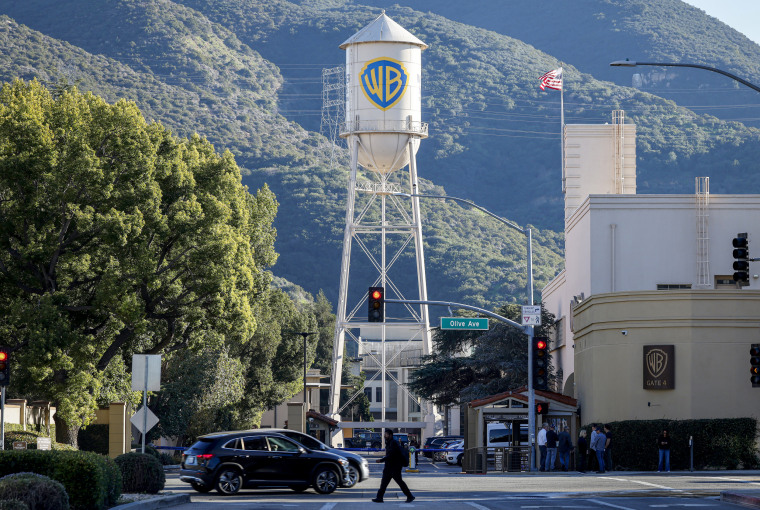
Warner Bros. Discovery on Wednesday rejected Paramount Skydance’s amended takeover offer, the latest in a series of rejections in David Ellison’s pursuit of the streaming and cable giant.

The media company said it remains committed to the $82.7 billion deal it reached in December to sell its streaming service, studio and HBO cable channel to Netflix.

‘The Board unanimously determined that the Paramount’s latest offer remains inferior to our merger agreement with Netflix across multiple key areas,’ Warner Bros. Discovery Chairman Samuel Di Piazza said in a statement.

‘Paramount’s offer continues to provide insufficient value,’ he continued.

In a letter to shareholders, Di Piazza wrote that Paramount Skydance’s offer carries ‘significant costs, risks and uncertainties as compared to the Netflix merger.’ The way the Paramount deal is structured creates a ‘lack of certainty’ about its finalization, he added.

Di Piazza adds in the letter that if the company were to agree to the Paramount merger and it failed to close, it would result in a ‘potentially considerable value destruction.’

‘What matters most right now is our focus as we start the year,’ Warner Bros. Discovery CEO David Zaslav said in a memo to employees seen by NBC News. ‘Our operating plans remain unchanged, and our priorities for 2026 are clear and intentional.’

Zaslav wrote that the ‘review was conducted with discipline and rigor, and was supported by independent financial and legal advisors.’

On Dec. 22, Paramount Skydance increased its offer for Warner Bros. Discovery with a personal guarantee from billionaire Larry Ellison, who was backing the financing for the deal. His son, David Ellison, is the CEO of Paramount Skydance.

However, that was not enough for Warner Bros. Discovery. That beefed-up offer followed Warner Bros. Discovery’s Dec. 17 public rejection of Paramount. It also preceded multiple private rejections before Paramount Skydance went public.

In a statement Thursday, Paramount said it remained committed to the offer that WBD has rejected twice. “WBD continues to raise issues in Paramount’s offer that we have already addressed, including flexibility in interim operations,” Paramount said.

At stake is the future of one of the most storied media empires in the United States.

The bidding by Paramount also comes amid a monumental shift in the media and streaming landscape at large. On Monday, Versant Media, the cable network spinoff from Comcast, began trading as an independent company. Shares have plunged more than 20% over the course of those two days. (Comcast is the parent company of NBCUniversal and NBC News.)

On CNBC, Di Piazza said it would be a mistake to compare Warner Bros. Discovery‘s cable networks to Versant. ‘Discovery Global is different, it has a lot more scale,’ he said.

Streaming companies such as Apple, Netflix and Amazon are also challenging traditional broadcasters such as Paramount-owned CBS for sports rights.

Warner Bros. Discovery controls properties ranging from CNN Worldwide and the Discovery Channel to HBO, as well as the Warner Bros. film studio and archive.

Despite the back and forth between Warner Bros. Discovery and Paramount, Netflix has so far proceeded with the deal it inked Dec. 5, under which the world’s largest streaming company would acquire a stake in WBD.

Warner’s cable networks would be spun out into a separate company as part of that deal. However, Paramount Skydance wants to buy everything Warner Bros. Discovery owns.

Paramount’s controlling shareholders, the Ellisons, have suggested they could obtain regulatory clearance more quickly and easily than Netflix.

In mid-2025, the Ellisons acquired Paramount with approval from the Trump administration. But that approval only came after CBS News agreed to pay $16 million to President Donald Trump’s future presidential library over an interview that “60 Minutes” had conducted with then-presidential candidate, Vice President Kamala Harris.

Netflix, for its part, has met with Trump at the White House over the deal. But Trump has said either bidder poses potential problems, in his view.

Netflix said in a statement that it ‘welcomed the Warner Bros. Discovery board of directors’ continued commitment to the merger agreement’ the two companies reached last year. ‘Netflix and Warner Bros. will bring together highly complementary strengths and a shared passion for storytelling,’ Netflix’s co-CEOs Ted Sarandos and Greg Peters said.

Di Piazza said on CNBC that the difference between Paramount’s offer and that of Netflix is that Warner Bros. and Netflix already ‘have a signed merger agreement’ that has ‘a clear path to closing.’ Di Piazza also said the Netflix deal offers ‘protections for our shareholders, if something stops the close, whatever that might be.’

Trump has said he will be personally involved in reviewing whichever merger proceeds.

Paramount did not immediately respond to a request for comment.

This post appeared first on NBC NEWS

The company that owns the iconic luxury retailer Saks Fifth Avenue filed for bankruptcy late Tuesday.

The move comes after Saks Global struggled with debt it took on to buy rival Neiman Marcus, lagging department store sales and a rising online market.

It’s one of the largest retail collapses since the Covid pandemic, and casts further doubt over the future of luxury fashion.

The retailer, which also owns Bergdorf Goodman, said early Wednesday its stores would remain open for now after it finalized a $1.75 billion financing package and appointed a new CEO.

The court process is meant to give the luxury retailer room to negotiate a debt restructuring with creditors or sell itself to a new owner to stave off liquidation. Failing that, the company may be forced to shutter.

Former Neiman Marcus CEO Geoffroy van Raemdonck will replace Richard Baker, who was the architect of the acquisition strategy that left Saks Global saddled with debt.

The company also appointed former Neiman Marcus executives Darcy Penick and Lana Todorovich as chief commercial officer and chief of global brand partnerships at Saks Global, respectively.

Saks Fifth Avenue, the retail arm of Saks Global, listed $1 billion to $10 billion in assets and liabilities, according to court documents filed in U.S. Bankruptcy Court in Houston.

A retailer long loved by the rich and famous, from Gary Cooper to Grace Kelly, Saks fell on hard times after the pandemic, as competition from online outlets rose, and brands started more frequently selling items through their own stores.

The original Saks Fifth Avenue store, known for displaying the likes of Chanel, Cucinelli and Burberry, was opened by retail pioneer Andrew Saks in 1867.

The new financing deal would provide an immediate cash infusion of $1 billion through ‌a loan from an investor group, Saks Global said.

A host of luxury brands were among the unsecured creditors, led by Chanel and Gucci owner Kering at about $136 million and $60 million respectively, the court filing said. The world’s biggest luxury conglomerate, LVMH, was listed as an unsecured creditor at $26 million. In total, Saks Global estimated there were between 10,001 and 25,000 creditors.

In 2024, Baker had masterminded the takeover of Neiman Marcus by Canada’s Hudson’s Bay Co, which had owned Saks since 2013, and later spun off the U.S. luxury assets to create Saks Global, bringing together three names that have defined American high fashion for more than a century.

The deal was designed to create a luxury powerhouse, but it saddled Saks Global with debt at a time when global luxury sales were slowing, complicating an already difficult turnaround for CEO and veteran executive Marc Metrick.

Saks Global struggled last year to pay vendors, who began withholding inventory, disrupting the company’s supply chain and leaving it with insufficient stock.

The thinly stocked shelves may have driven shoppers away to rivals like Bloomingdale’s, which posted strong sales in 2025, compounding pressure on Saks Global.

“Rich people are still buying,” Morningstar analyst David Swartz said last month, “just not so much at Saks.”

Running out of cash, Saks Global last month sold the real estate of the Neiman Marcus Beverly Hills flagship store for an undisclosed amount. It had also been looking to sell a minority stake in exclusive department store Bergdorf Goodman to help cut debt.

On Dec. 30, it failed to make an interest payment of more than $100 million to bondholders.

This post appeared first on NBC NEWS

ROME — Italian fashion designer Valentino Garavani has died, his foundation said Monday.

Usually known only by his first name, Valentino was 93, and had retired in 2008.

Founder of the eponymous brand, Valentino scaled the heights of haute couture, created a business empire and introduced a new color to the fashion world, the ‘Valentino Red.’

‘Valentino Garavani passed away today at his Roman residence, surrounded by his loved ones,’ the foundation said on Instagram.

He will lie in state Wednesday and Thursday, while the funeral will take place in Rome on Friday, it added.

Ira de Fürstenberg, president of Valentino Parfums, alongside Valentino Garavani in his perfume laboratory in 1978.Alain Dejean / Getty Images file

Valentino was ranked alongside Giorgio Armani and Karl Lagerfeld as the last of the great designers from an era before fashion became a global, highly commercial industry run as much by accountants and marketing executives as the couturiers.

Lagerfeld died in 2019, while Armani died in September.

Valentino was adored by generations of royals, first ladies and movie stars, from Jackie Kennedy Onassis to Julia Roberts and Queen Rania of Jordan, who swore the designer always made them look and feel their best.

“I know what women want,” he once remarked. “They want to be beautiful.”

Italian fashion designer Valentino.Andrea Blanch / Getty Images file

Never one for edginess or statement dressing, Valentino made precious few fashion faux-pas throughout his nearly half-century-long career, which stretched from his early days in Rome in the 1960s through to his retirement in 2008.

His fail-safe designs made Valentino the king of the red carpet, the go-to man for A-listers’ awards ceremony needs.

His sumptuous gowns have graced countless Academy Awards, notably in 2001, when Roberts wore a vintage black and white column to accept her best actress statue. Cate Blanchett also wore Valentino — a one-shouldered number in butter-yellow silk — when she won the Oscar for best supporting actress in 2004.

Valentino and a group of models in his designs during a fashion show in Paris in 1993.Gamma-Rapho via Getty Images file

Valentino was also behind the long-sleeved lace dress Jacqueline Kennedy wore for her wedding to Greek shipping magnate Aristotle Onassis in 1968. Kennedy and Valentino were close friends for decades, and for a spell, the one-time U.S. first lady wore almost exclusively Valentino.

He was also close to Diana, Princess of Wales, who often donned his sumptuous gowns.

Beyond his signature orange-tinged shade of red, other Valentino trademarks included bows, ruffles, lace and embroidery; in short, feminine, flirty embellishments that added to the dresses’ beauty and hence to that of the wearers.

Perpetually tanned and always impeccably dressed, Valentino shared the lifestyle of his jet-set patrons. In addition to his 152-foot yacht and an art collection including works by Picasso and Miro, the couturier owned a 17th-century chateau near Paris with a garden said to boast more than a million roses.

This post appeared first on NBC NEWS

Trump Media & Technology will merge with a fusion power company in an all-stock deal that the companies said Thursday is valued at more than $6 billion.

Devin Nunes, the Republican congressman who resigned in 2021 to become the CEO of Trump Media, will be co-CEO of the new company with TAE Technologies CEO Michl Binderbauer.

Shares of Trump Media & Technology, the parent company of President Donald Trump’s Truth Social media platform, have tumbled 70% this year but jumped 20% before the opening bell Thursday.

TAE is a private company and the merger with Trump Media would create one of the first publicly traded nuclear fusion companies.

“We’re taking a big step forward toward a revolutionary technology that will cement America’s global energy dominance for generations,” Nunes said in a prepared statement.

TAE focuses on nuclear fusion, a technology that combines two light atomic nuclei to form a single heavier one. It releases enormous amount of energy, a process that occurs on the sun and other stars, according to the United Nation’s International Atomic Energy Agency.

TAE and Trump Media shareholders will each own approximately 50% of the combined company.

The companies say the transaction values each TAE common stock at $53.89 per share.

At closing, Trump Media & Technology Group will be the holding company for Truth Social and TAE, along with its subsidiaries TAE Power Solutions and TAE Life Sciences.

This post appeared first on NBC NEWS