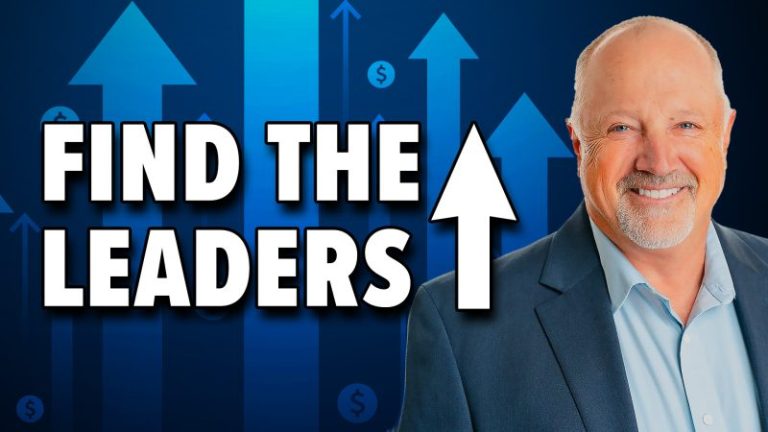
Is the market’s next surge already underway? Find out with Tom Bowley’s breakdown of where the money is flowing now and how you can get in front of it.
In this video, Tom covers key moves in the major indexes, revealing strength in transports, small caps, and home construction. He identifies industry rotation signals, which are pointing to aluminum, recreational products, and furnishings. Tom then demonstrates how to use StockCharts’ tools to scan for momentum stocks in emerging leadership groups — see why SGI tops Tom’s list. He ends with a discussion of post-earnings reactions from major names like GOOGL, TSLA, IBM, and LVS.
And, of course, Tom wraps every idea with clear chart setups you can act on today.
This video premiered on July 24, 2025. Click this link to watch on Tom’s dedicated page.
Missed a session? Archived videos from Tom are available at this link.
Sister Stephanie Schmidt had a hunch about what her fellow nuns would discuss over dinner at their Erie, Pennsylvania, monastery on Wednesday night.
The day before, a Republican operative in the battleground state falsely suggested to his nearly 58,000 followers on X that no one lived at the monastery and that mail ballots cast from there would be “illegal votes.” Cliff Maloney, who hired 120 people to go door-to-door across Pennsylvania urging Republican voters to return their mail ballots, wrote on X that one of those workers had “discovered” an Erie address where 53 people were registered to vote but “NO ONE lives there.”
A former deputy Palm Beach County sheriff who fled to Moscow and became one of the Kremlin’s most prolific propagandists is working directly with Russian military intelligence to pump out deepfakes and circulate misinformation that targets Vice President Kamala Harris’s campaign, according to Russian documents obtained by a European intelligence service and reviewed by The Washington Post.
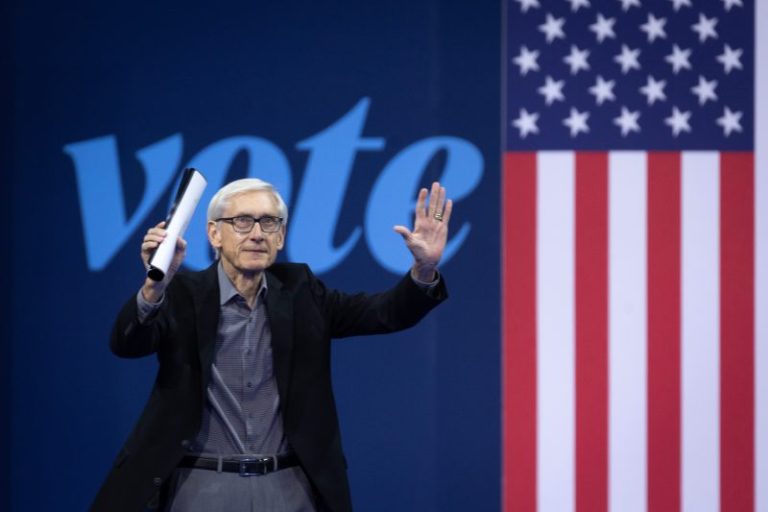
MADISON, Wis. — Early voting kicked off in this battleground state this week with computer delays and long lines.
Voters waited as long as three hours Tuesday to cast ballots in West Bend, a city of about 32,000, city clerk Jilline Dobratz said. State computer issues reared up again Wednesday, and by midafternoon, voters had to wait about 90 minutes to vote in the community 40 miles northwest of Milwaukee, she said. Residents were not used to anything like it.
Samsung Electronics has entered into a $16.5 billion contract for supplying semiconductors to Tesla, based on a regulatory filing by the South Korean firm and Tesla CEO Elon Musk’s posts on X.
The memory chipmaker, which had not named the counterparty, mentioned in its filing that the effective start date of the contract was July 26, 2025 — receipt of orders — and its end date was Dec. 31, 2033.
However, Musk later confirmed in a reply to a post on social media platform X that Tesla was the counterparty.
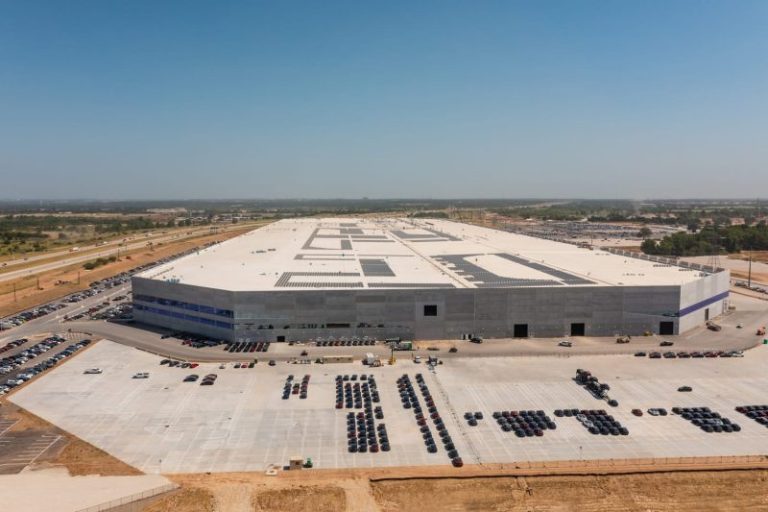
He also posted: “Samsung’s giant new Texas fab will be dedicated to making Tesla’s next-generation AI6 chip. The strategic importance of this is hard to overstate. Samsung currently makes AI4.TSMC will make AI5, which just finished design, initially in Taiwan and then Arizona.”
“Samsung agreed to allow Tesla to assist in maximizing manufacturing efficiency. This is a critical point, as I will walk the line personally to accelerate the pace of progress,” Musk said on X, and suggested that the deal with Samsung could likely be even larger than the announced $16.5 billion.
Samsung earlier said that details of the deal, including the name of the counterparty, will not be disclosed until the end of 2033, citing a request from the second party “to protect trade secrets,” according to a Google translation of the filing in Korean on Monday.
“Since the main contents of the contract have not been disclosed due to the need to maintain business confidentiality, investors are advised to invest carefully considering the possibility of changes or termination of the contract,” the company said.
The company’s shares rose over 6% in trading on Monday to reach their highest level since September 2024.
Tesla was a probable customer, Ray Wang, research director of semiconductors, supply chain and emerging technology at The Futurum Group, told CNBC before Musk’s post. Bloomberg News had earlier reported that Samsung’s deal was with Tesla, citing a source.
Samsung’s foundry service manufactures chips based on designs provided by other companies. It is the second largest provider of foundry services globally, behind Taiwan Semiconductor Manufacturing Company.
The company stated in April that it aimed to commence 2 nanometer mass production in its foundry business and secure major orders for the next-generation technology. In semiconductor technology, smaller nanometer sizes signify more compact transistor designs, which lead to greater processing power and efficiency.
Local South Korean media outlets have also reported that American chip firm Qualcomm could place an orderfor chips manufactured using Samsung’s 2 nanometer technology.
Samsung, which is set to deliver earnings on Thursday, expects its second-quarter profit to more than halve. An analyst previously told CNBC that the disappointing forecast was due to weak orders for its foundry business and as the company has struggled to capture AI demand for its memory business.
The company has fallen behind competitors SK Hynix and Micron in high-bandwidth memory chips — an advanced type of memory used in AI chipsets.
SK Hynix, the leader in HBM, has become the main supplier of these chips to American AI behemoth Nvidia. While Samsung has reportedly been working to get the latest version of its HBM chips certified by Nvidia, a report from a local outlet suggests these plans have been pushed back to at least September.
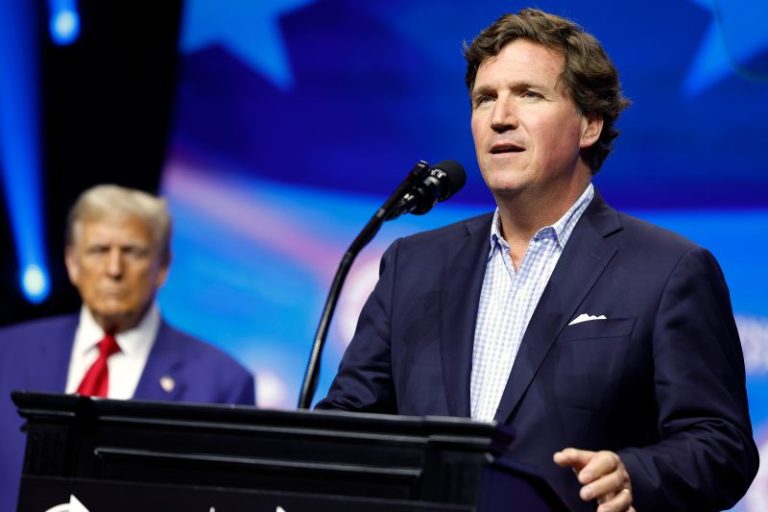
DULUTH, Ga. — Former Fox News host Tucker Carlson warmed up the crowd at Donald Trump’s rally here Wednesday night with a dark metaphor, bashing Vice President Kamala Harris and declaring that “dad” was coming home to mete out discipline.
“He’s pissed!” Carlson said to extended cheers. “Dad is pissed. … And when dad gets home, you know what he says? ‘You’ve been a bad girl. You’ve been a bad little girl, and you’re getting a vigorous spanking right now.’”
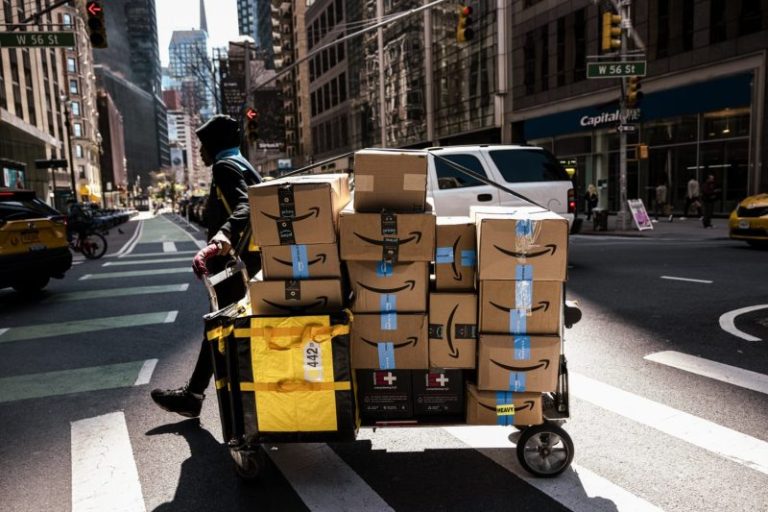
President Donald Trump on Wednesday signed an executive order ending the de minimis trade loophole for low-value packages shipped from all countries.
The order, which takes effect Aug. 29, will subject any shipments of imported goods into the U.S. worth $800 or less to duties, the White House said.
Any goods shipped through the international postal network will be subject to tariff rates based on the value of the package and its country of origin.
The move comes after Trump in May shuttered the de minimis loophole for goods from China and Hong Kong. A federal trade court on Monday declined to block Trump’s de minimis ban, even after an auto parts retailer argued the action was unlawful and threatened its business.
Use of the de minimis provision has exploded in recent years as online shopping has become more prevalent. Ultra-cheap online retailers such as Temu and Shein have used the loophole to ship packages to American shoppers directly from China duty-free.
Shares of PDD Holdings, the parent company of Temu, dipped lower following the announcement.
The Trump administration has sought to close the loophole, calling it a “big scam” that hurts U.S. businesses. Officials have said de minimis facilitates shipments of fentanyl and other illicit substances, saying the packages are less likely to be inspected by customs agents.
The volume of de minimis shipments has skyrocketed to 309 million units so far this fiscal year, up from 115 million for all of last year, the White House said.
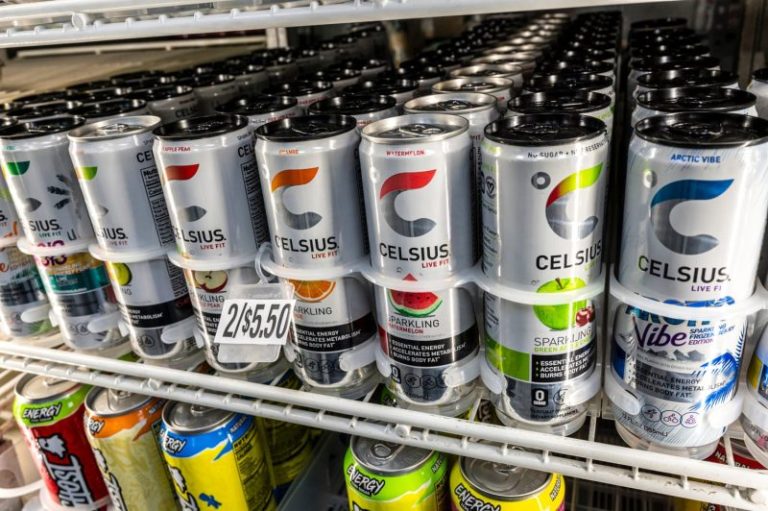
The canned cocktail maker High Noon is warning customers that some of its vodka seltzers were accidentally labeled as Celsius energy drinks.
In a recall notice posted to the Food and Drug Administration’s website, High Noon said an unspecified number of its Beach Variety packs contain cans are filled with High Noon vodka seltzer alcohol but have been mislabeled as Celsius Astro Vibe energy drink, Sparkling Blue Razz Edition, with a silver top.
Celsius Astro Vibe Energy Drink, Sparkling Blue Razz Edition.Celsius
The products were shipped to retailers in Florida, New York, Ohio, South Carolina, Virginia and Wisconsin from July 21 to July 23.
The recall was initiated after High Noon discovered that a shared packaging supplier mistakenly shipped empty Celsius cans to High Noon, it said.
July 29 (Reuters) – Union Pacific said on Tuesday it would buy smaller rival Norfolk Southern in an $85-billion deal to create the country’s first coast-to-coast freight rail operator and reshape the movement of goods from grains to autos across the U.S.
If approved, the deal would be the largest-ever buyout in the sector and combine Union Pacific‘s stronghold in the western two-thirds of the United States with Norfolk’s 19,500-mile network that primarily spans 22 eastern states.
The two railroads are expected to have a combined enterprise value of $250 billion and would unlock about $2.75 billion in annualized synergies, the companies said.
The $320 per share price implies a premium of 18.6% for Norfolk from its close on July 17, when reports of the merger first emerged.
The companies said on Thursday they were in advanced discussions for a possible merger.
The deal will face lengthy regulatory scrutiny amid union concerns over potential rate increases, service disruptions and job losses. The 1996 merger of Union Pacific and Southern Pacific had temporarily led to severe congestion and delays across the Southwest.
The deal reflects a shift in antitrust enforcement under U.S. President Donald Trump’s administration. Executive orders aimed at removing barriers to consolidation have opened the door to mergers that were previously considered unlikely.
A Norfolk Southern freight train passes through Homestead, Pa.Gene J. Puskar / AP file
Surface Transportation Board Chairman Patrick Fuchs, appointed in January, has advocated for faster preliminary reviews and a more flexible approach to merger conditions.
Even under an expedited process, the review could take from 19 to 22 months, according to a person involved in the discussions.
Major railroad unions have long opposed consolidation, arguing that such mergers threaten jobs and risk disrupting rail service.
“We will weigh in with the STB (regulator) and with the Trump administration in every way possible,” said Jeremy Ferguson, president of the SMART-TD union‘s transport division, after the two companies said they were in advanced talks last week.
“This merger is not good for labor, the rail shipper/customer or the public at large,” he said.
The companies said they expect to file their application with the STB within six months.
The SMART-TD union‘s transport division is North America’s largest railroad operating union with more than 1,800 railroad yardmasters.
The North American rail industry has been grappling with volatile freight volumes, rising labor and fuel costs and growing pressure from shippers over service reliability, factors that could further complicate the merger.
Union Pacific‘s shares were down about 1.3%, while Norfolk fell about 3%.
The proposed deal had also prompted competitors BNSF, owned by Berkshire Hathaway BRKa.N, and CSX CSX.O, to explore merger options, people familiar with the matter said.
Agents at the STB are already conducting preparatory work, anticipating they could soon receive not just one, but two megamerger proposals, a person close to the discussions told Reuters on Thursday.
If both mergers are approved, the number of Class I railroads in North America would shrink to four from six, consolidating major freight routes and boosting pricing power for the industry.
The last major deal in the industry was the $31-billion merger of Canadian Pacific CP.TO and Kansas City Southern that created the first and only single-line rail network connecting Canada, the U.S. and Mexico.
That deal, finalized in 2023, faced heavy regulatory resistance over fears it would curb competition, cut jobs and disrupt service, but was ultimately approved.
Union Pacific is valued at nearly $136 billion, while Norfolk Southern has a market capitalization of about $65 billion, according to data from LSEG.
(Reuters reporting by Shivansh Tiwary and Sabrina Valle, additional reporting by Abhinav Parmar, Nathan Gomes and Mariam Sunny; Reuters editing by Sriraj Kalluvila, Pooja Desai, Dawn Kopecki and Cynthia Osterma)